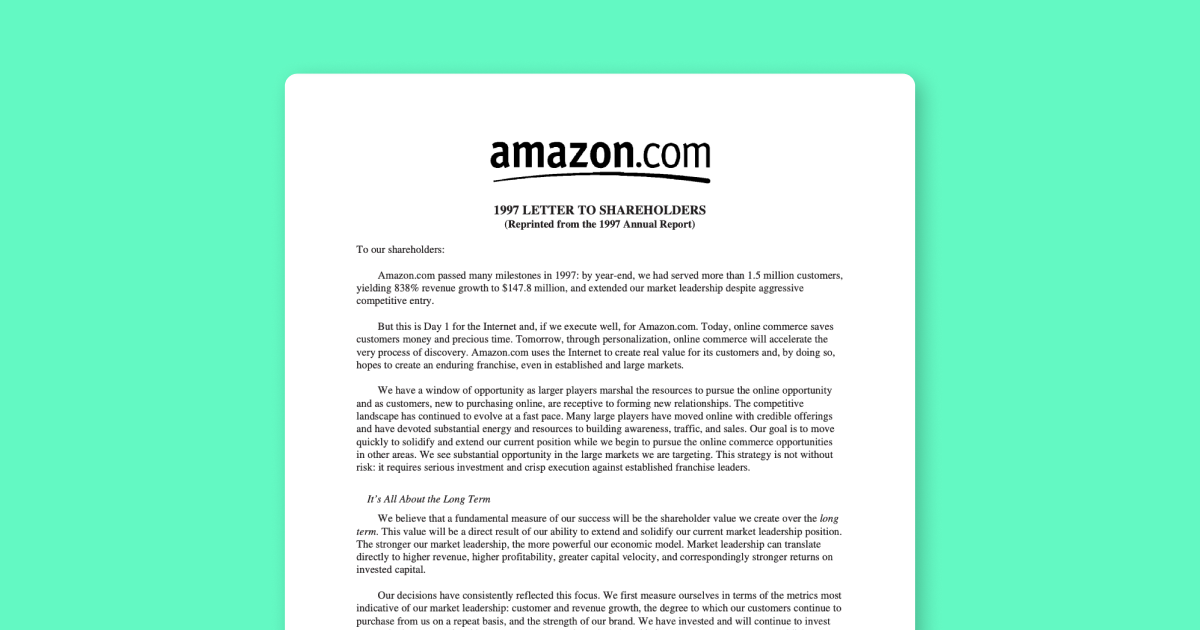
The Cornerstone of Trust: Why a Shareholder Letter Matters
In the intricate world of finance and investment, trust is the most valuable currency. For publicly traded companies, fostering and maintaining this trust with their investors is paramount. One of the most powerful tools in a company's arsenal for achieving this is the meticulously crafted shareholders letter. More than just a formality, this annual communication serves as a direct conduit from top management to its stakeholders, offering vital insights into the company's performance, strategic direction, and overarching philosophy.
A well-drafted shareholders letter transcends mere financial reporting; it provides investors with a sense of peace regarding their investments. It's an opportunity for a company to not only detail its financial performance over the past year but also to articulate its prospects, address challenges, and reaffirm its commitment to its core values. In essence, it humanizes the corporate entity, allowing executives to speak directly to the individuals who have placed their capital and faith in the organization.
Consider the recent example of Berkshire Hathaway. When Greg Abel penned his first annual shareholders letter following a significant $4.5 billion write-down on stakes in Kraft Heinz and Occidental Petroleum, he faced the unique challenge of stepping into the shoes of a legend while navigating substantial financial news. His opening, paying tribute to Warren Buffett and promising to uphold Berkshire's culture of trust and integrity, immediately set a tone of continuity and reassurance. This demonstrates how a shareholders letter can be instrumental in managing expectations, communicating leadership transitions, and reinforcing the bedrock principles that have guided a company for decades, even in the face of financial adjustments. It underscores that Beyond the Numbers: How Shareholder Letters Explain Performance & Vision, they convey the very essence of a company's identity and future path.
Crafting Your Message: Key Components of an Impactful Shareholder Letter
To truly boost investor confidence, a shareholders letter must be comprehensive, transparent, and forward-looking. While formats can vary slightly based on company specifics, certain conventional components are universally expected and contribute significantly to its impact:
The Art of the Opening and Leadership Perspective
The beginning of your letter sets the stage. As Abel demonstrated, acknowledging the gravity of the role ("honored," "humbled") and the legacy of predecessors (a "very hard act to follow") can establish immediate rapport. This section is often where the CEO or equivalent top executive addresses shareholders directly, sharing their background and approach. This Berkshire Hathaway's New Era: Key Takeaways from Abel's First Shareholder Letter highlights the importance of this personal touch in affirming leadership and strategic vision.
Performance Review: The Past Year in Focus
- Annual Financial Results: Provide a clear, concise overview of the company's financial performance. While the annual report contains all the details, the letter should highlight key metrics, trends, and significant financial events.
- Operational Highlights and Achievements: Go beyond the numbers to showcase significant operational successes, product launches, market expansions, or improvements in efficiency. Professionals often use this section to celebrate accomplishments and explain their relevance to overall growth.
Strategic Overview: Glimpses into the Future
- Market Conditions and Industry Trends: Offer an executive-level assessment of the broader economic landscape and specific industry dynamics that impact your business. This demonstrates foresight and strategic awareness.
- Growth Plans and Strategic Initiatives: Outline the company's future objectives, significant projects, and how it plans to capitalize on opportunities. This section is critical for building excitement and confidence in future prospects.
- Risk and Opportunities: Transparency about potential challenges and how the company plans to mitigate them, alongside identified opportunities for expansion and value creation, is crucial. Investors appreciate honesty regarding the company's operational environment.
Reinforcing Culture and Values
A successful company isn't just about its balance sheet; it's about its identity. The letter should reiterate the company's mission, values, and the culture that underpins its operations. This helps investors understand the 'why' behind the 'what,' fostering a deeper connection and reinforcing a positive perception of the company's ethical compass and long-term sustainability.
Practical Strategies for Drafting a Compelling Shareholder Letter
Drafting a compelling shareholders letter requires more than just compiling facts; it demands strategic communication skills. Here are some actionable tips to ensure your letter resonates positively with investors:
- Embrace Authenticity and Transparency: Be forthright about both successes and challenges. When major events, like Berkshire Hathaway's write-down, occur, addressing them directly and explaining the context builds trust far more effectively than sidestepping them. Investors value honesty, even when the news isn't entirely positive.
- Prioritize Clarity and Conciseness: Avoid corporate jargon and overly technical language. While addressing sophisticated investors, remember that many shareholders appreciate clear, accessible explanations. The goal is to inform, not to impress with complexity. Use analogies or simplified explanations for intricate financial or operational details.
- Maintain a Forward-Looking Perspective: While reporting on the past year is essential, shareholders are primarily interested in the future. Dedicate significant space to discussing strategic initiatives, growth drivers, and how the company is positioned for ongoing success. This instills confidence in the company's long-term vision and potential.
- Showcase Your Leadership Team and Operational Depth: Highlight key executives and their contributions. Abel's letter, for instance, mentioned new lineups for the shareholder meeting, introducing Ajit Jain (insurance), Katie Farmer (BNSF CEO), and Adam Johnson (NetJets CEO overseeing consumer, service, and retail businesses). This demonstrates the depth of management talent and provides investors with a broader understanding of who is driving the various parts of the enterprise. Furthermore, mentioning that Abel had already managed non-insurance companies since 2018, and that his insights were praised by executives, adds credibility and reassures investors about the continuity of strong leadership across Berkshire’s diverse portfolio, which includes everything from Geico and BNSF to Dairy Queen, See's Candy, and industrial suppliers like Precision Castparts.
- Engage with Empathy: Recognize that your shareholders are diverse. Some are seasoned investors, others are individuals planning for retirement. Tailor your tone to be professional yet empathetic, acknowledging their investment and their hopes for its growth.
- Proofread Meticulously: A letter riddled with typos or grammatical errors undermines credibility. Professionalism extends to every detail of the document's presentation.
Effective and regular communication through the shareholders letter is a potent strategy for retaining investor confidence and trust. It allows the leadership to directly address the investor base, providing context for the annual report and explaining the nuances of the company's operations and market conditions in a narrative format that raw data often cannot convey. By investing time and expertise into drafting a compelling letter, companies can solidify their relationship with shareholders and pave the way for sustained investor support.
Conclusion
The shareholders letter is far more than a routine annual document; it's a strategic communication asset. By thoughtfully detailing financial performance, outlining strategic vision, addressing challenges with transparency, and reinforcing core values, companies can significantly boost investor confidence. It's an opportunity to build trust, articulate leadership's perspective, and provide a holistic view of the company's health and future trajectory. In an investment landscape where information is abundant, a well-crafted, authentic, and forward-looking shareholders letter stands out as an indispensable tool for fostering enduring relationships with those who believe in your company's mission and potential.